


If you are planning a trip to India and a tiger sighting is on your list, this post will help you choose the right park.
India is home to nearly 75 percent of the world's wild tiger population. As of the latest census, the country has approximately 3,682 tigers spread across 58 tiger reserves. But here is the truth that most websites will not tell you: not all tiger reserves give you the same chances of actually seeing a tiger.
At Alkof Holidays, we have been running tiger safaris in India since 2011. Our team does not just plan tours from a Delhi office. We have a local team on the ground in Madhya Pradesh, and our drivers and guides are in these forests almost every day. We did a full 8-day ground trip across Central India in June 2026 covering Panna, Khajuraho, Bandhavgarh, Kanha, Pench, and Tadoba to see things for ourselves. Our Delhi team covers national parks across the rest of India, including Jim Corbett, Ranthambore, Kaziranga, Kabini, Bandipur, and Gir, with regular on-ground visits throughout the season.
This list is based on that experience. It is honest, it is current, and it is built around one single question: where are you most likely to see a tiger?
One Thing Nobody Tells You Before You Book a Tiger Safari
Before we get to the list, there is something important you need to understand.
In every national park in India, only 20 percent of the core zone is open to visitors for safari. The remaining 80 percent is completely off-limits to tourists. Only forest department staff are allowed inside that restricted area. This is not a small detail. It means that when you sit in a safari jeep, you are covering a fraction of the total forest. Tigers move freely across the entire reserve, including the 80 percent you will never see.
This makes your choice of park important, but it also makes your choice of timing just as important.
Almost every website will tell you that March to June is the best time for tiger safaris in India. That is true, but it is not the complete picture. What most people do not mention is that by the second half of June, the monsoon begins moving into Central India's forests. Once it rains, the vegetation thickens quickly, the tracks inside the forest become difficult to navigate, and tiger sightings drop sharply. An overcast sky and fresh growth in the forest means a tiger can be standing 15 meters away and you will not see it.
So when you are trying to see a tiger in just 20 percent of the accessible core zone, the month you visit and the specific weeks within that month matter more than people realize.
We cover the best months in detail in a separate post: Best Time to Visit Central India for the Highest Tiger Sighting Chances. If you want to go deep on timing, read that after this one. Here, we focus on which parks give you the best odds.
How We Ranked These Parks
Tiger sighting chances depend on three things: tiger density, the size of the area open to tourists, and how regularly tigers move through the zones where jeeps are permitted to go.
A park with 200 tigers spread across 2,000 square kilometers may give you worse sightings than a park with 80 tigers in 500 square kilometers of accessible terrain. More tigers in a smaller accessible area means higher chances of crossing paths with one.
We also factored in recent events on the ground, including tiger deaths and population changes in 2025 and 2026, because those things directly affect what visitors are actually seeing right now.
Here is our list.
1. Bandhavgarh National Park, Madhya Pradesh
Bandhavgarh sits at the top of this list for one simple reason: it has the highest tiger density of any national park in Central India. With over 120 tigers in a reserve of around 1,536 square kilometers, and a large portion of those tigers concentrated in the core zones open to safari jeeps, your chances of a sighting here are better than anywhere else in the country.
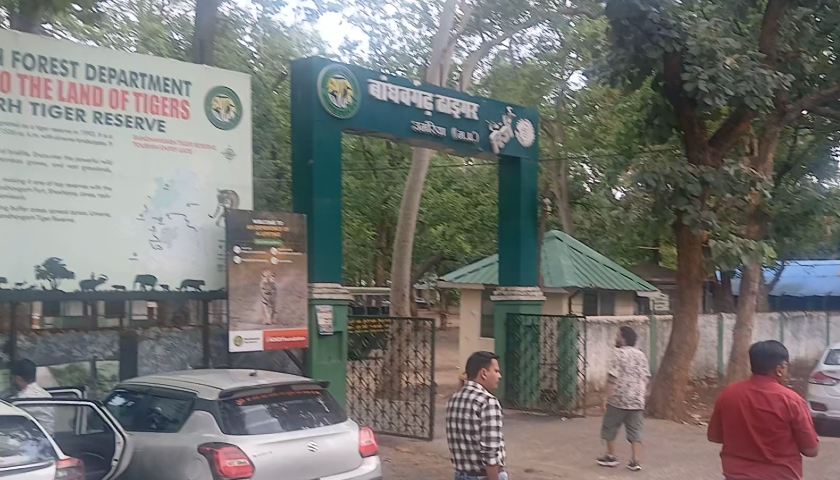
The terrain also works in your favor. Bandhavgarh has mixed forest, open meadows and rocky hills. Tigers here are well used to jeeps. They cross roads, walk through clearings and sit near water sources in full view. If you plan enough safaris and visit in the right months, Bandhavgarh almost always delivers.
We want to be honest about something. The park recently lost Pujari, one of its most well-known male tigers, in May 2026. He died in a territorial fight in the Khitauli range. Pujari was a familiar face for thousands of visitors and wildlife photographers over many years, and his loss is genuinely felt by everyone who knew this forest. But Bandhavgarh is still Bandhavgarh. The population remains large, new males are establishing territories, and the sighting rates here are still the highest in India.
Best time to visit: March to May for the highest tiger sighting chances. October to February for pleasant weather and good visibility.
2. Tadoba Andhari Tiger Reserve, Maharashtra
Tadoba is one of the most underrated tiger reserves in India and deserves far more attention than it currently gets. The tiger population is large, the landscape is relatively open, and the sighting rates are among the best in the country.
What makes Tadoba work so well is the combination of open grasslands, a large lake and dry deciduous forest. During the summer months, tigers come to the water sources predictably. Visitors who pick the right entry points and plan their safaris well come back with very strong sightings. Leopard sightings are also frequent, which is a bonus for anyone who loves big cats.
Tadoba also tends to be quieter than Bandhavgarh or Ranthambore, which means your safari feels more personal. The tigers here are relaxed around vehicles, and sightings of tigresses with cubs are common in the right season.
Best time to visit: March to June. Summer months are when Tadoba truly comes into its own.
3. Ranthambore National Park, Rajasthan
Ranthambore is one of the most famous tiger reserves in the world, and for most of the season, the sighting chances are genuinely excellent. The combination of tigers, ancient Rajput fort ruins overlooking open lakes makes it visually unlike any other park in India.

We have placed it at number three, which was not an easy decision. But there is one honest warning we always give our travelers about Ranthambore: skip December and January. Fog in Rajasthan during those two months is heavy, visibility inside the forest drops significantly, and tiger sightings are noticeably lower compared to the rest of the season. We have taken travelers to Ranthambore in December who did multiple safaris without seeing a tiger. It does happen, and it is directly linked to the seasonal conditions.
Visit between February and May, and Ranthambore is exceptional. The tigers, particularly the females, are relaxed around vehicles and will often stay in open terrain for extended periods.
Best time to visit: February to May. Avoid December and January if tiger sightings are your primary goal.
4. Panna National Park, Madhya Pradesh
Panna is one of the most remarkable conservation stories in wildlife history. In 2009, the park lost every single tiger it had to systematic poaching. What followed was a bold reintroduction program, bringing in tigers from Bandhavgarh, Kanha and Pench. Today, Panna has over 80 tigers, and sighting rates have improved dramatically over the past few years.
Right now, travelers visiting Panna are regularly seeing tigresses with cubs along the Ken River corridor. The landscape is beautiful in a way that is different from the other Central India parks. The Ken River flows through the forest, and a boat safari here gives you crocodiles, gharials and wading birds alongside the jungle backdrop. Tourist footfall at Panna is lower than at Bandhavgarh or Ranthambore, which means a quieter, more intimate experience.
Panna also connects naturally with Khajuraho, which is under 45 kilometers away. For anyone doing a Central India tiger circuit, Panna fits in easily and adds real value to the itinerary.
Panna sits at number four because, while sightings are excellent and improving, the consistency is not yet at the level of the top three. But this park is rising fast, and we would not be surprised to see it move up in the next year or two.
Best time to visit: March to June for tiger sightings. October to February for pleasant weather and river birdwatching.
5. Pench National Park, Madhya Pradesh and Maharashtra
Pench is the forest that Rudyard Kipling drew inspiration from when he wrote The Jungle Book, and if you spend a morning inside it, you will understand the connection immediately. The teak forests, the open river valleys and the quality of silence in this park have a character that stays with you.
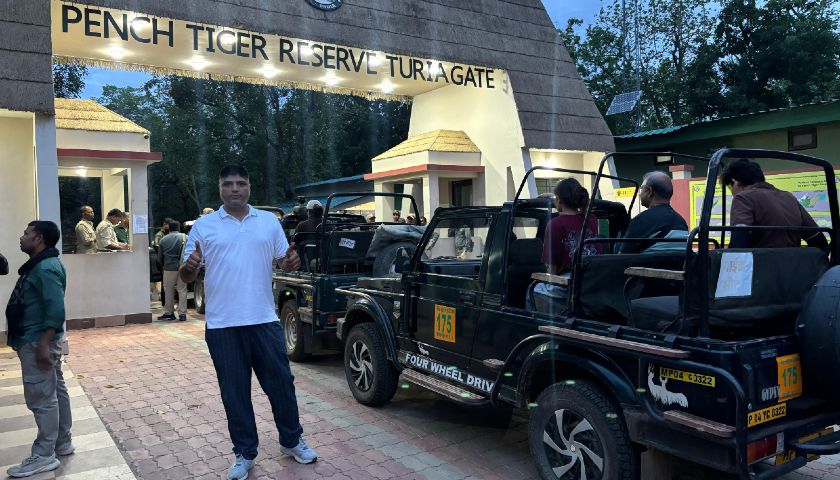
Tiger sightings in Pench are good and improving. The park has a healthy tiger population, and leopard sightings are also frequent, which makes the overall wildlife experience richer than pure tiger numbers might suggest. The park is less intense than Bandhavgarh in terms of sheer sighting frequency, but it makes up for that in atmosphere and the quality of the experience.
Pench pairs very well with Kanha, since the two parks are within reasonable driving distance of each other and share similar landscape characteristics. If you are planning a Central India circuit of 10 to 14 days, Pench and Kanha together make a logical and rewarding combination.
Best time to visit: October to June. March to May for the best tiger sighting chances.
6. Kanha National Park, Madhya Pradesh
We have placed Kanha at number six on this list, and we want to be completely honest about why, because Kanha deserves a fuller explanation than just a ranking number.
Kanha is one of the most beautiful national parks in India. The sal forests, the open Kanha meadow, the Barasingha grasslands, the Gaur herds moving through the forest at dawn, and the sheer scale of the landscape are unlike anything else in Central India. We have visited Kanha multiple times and every single time we leave wanting to come back. The park has a quality that is hard to describe unless you have experienced it firsthand.
But this post is specifically about tiger sighting chances, and Kanha's position at six comes down to two honest reasons.
First, Kanha is a very large park. The area open to tourists is spread across multiple zones, which means that even within the accessible 20 percent of the core, tiger density in any given area is lower compared to Bandhavgarh or even Pench. You can have a wonderful safari in Kanha and not see a tiger, not because they are not there, but because the forest is vast and the animals have more room to be elsewhere.
Second, and more importantly for anyone planning a visit right now: Kanha suffered a significant and painful blow in 2025 and 2026 when a tigress and several of her cubs died in the Mukki zone, with a suspected outbreak of Canine Distemper Virus. This affected the sighting patterns in certain areas, and we feel we owe our travelers a clear picture of what has been happening on the ground.
During our June 2026 ground trip, our naturalist on the ground in Kanha told us about another incident that shook everyone who works in this forest. Two adult male tigers fought each other for two full days in the Kanha zone over a tigress. Safari guides witnessed it over two full days. Visitors captured it on video cameras, which are permitted inside the core zone. The tigress watched the entire fight from a distance. Both males died from their injuries. It is the kind of thing that rarely makes it into news headlines but is known to every guide, naturalist and driver who works inside this forest. These are not isolated events. They reflect the pressure building inside Kanha as the tiger population grows faster than the available territory.
The overall tiger population at Kanha remains large, and the forest department is monitoring the situation closely. But we cannot rank Kanha higher than six on a list that is specifically about sighting chances while being honest about what has been happening there.
That said, if you visit Kanha and you are lucky, you may come across Chota Bajrang, a young male tiger who has been making an impression on visitors and guides alike. A sighting of Chota Bajrang is something people remember for a long time.
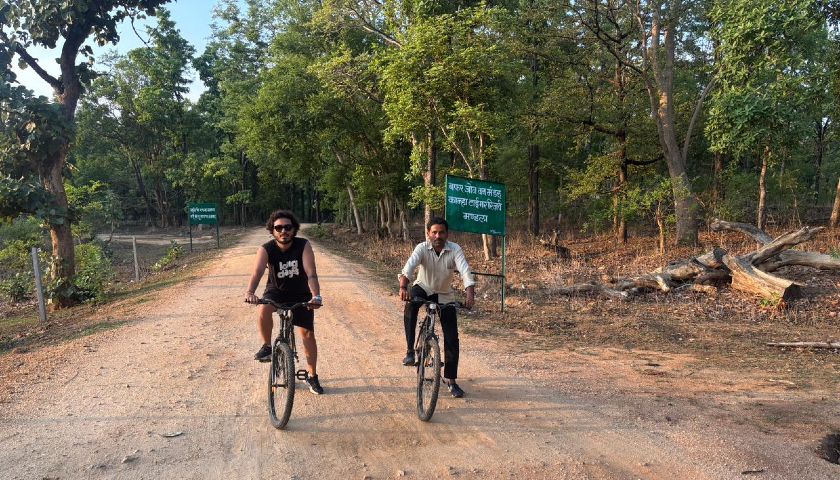
Kanha is absolutely worth visiting, and we recommend it strongly. Just not as your primary or only destination if maximizing tiger sightings is your main goal on a short trip. Beyond the safaris, Kanha offers some experiences that no other Central India park does. A morning cycling ride through the buffer zone and a visit to the local villages around the park give you a completely different side of this forest and the people who live alongside it.
Best time to visit: March to May. The Kanha meadow is at its best in the early morning light during these months.
Why This List Was Not Easy to Make
We want to be transparent about something. Creating this list was not straightforward. There are some very strong national parks that did not make our final six, and they deserve to be mentioned honestly.
Jim Corbett National Park in Uttarakhand has the largest tiger population of any single reserve in India. Bandipur National Park in Karnataka has the highest tiger density of any national park in India at 19.83 tigers per 100 square kilometers, according to the 2024 tiger status report, higher even than Bandhavgarh. Kabini Wildlife Sanctuary, also in Karnataka, is famous for its exceptional leopard and elephant sightings alongside tigers, and the experience there is unlike anything in Central India.
All three are genuinely excellent destinations and we would recommend any of them depending on what a traveler is looking for.
But when we sat down to rank purely on tiger sighting chances and overall safari experience, we kept coming back to Central India. Tadoba, Pench, Kanha, Bandhavgarh and Panna form a connected belt that is widely known as the tiger circuit of India. Together, these parks dominate when it comes to tiger density, safari infrastructure and the sheer frequency of sightings. That is why five of our six picks come from this belt, and we stand behind that decision.
The Central India Tiger Circuit
If you look at our list, five of the six parks, Bandhavgarh, Panna, Pench, Kanha and Tadoba, form a connected belt across Central India and Maharashtra. This region is the tiger safari heartland of India, and for good reason. The density of tigers, the quality of the forests and the way these parks sit in relation to each other make Central India the most rewarding destination for anyone serious about seeing tigers in the wild.
We run Central India tiger safari tours throughout the season. Our local team in Madhya Pradesh personally manages ground operations. Our drivers and guides are in these forests on a regular basis, not visiting once a year from a city. If you want to see all three of the top-ranked Central India parks in a single trip, our Central India Wildlife Tour covers Bandhavgarh, Kanha and Pench across 7 days with private jeep safaris in all three core zones. If you are planning a tiger safari in India and want straight advice about which parks to combine, how many days to plan, and what to realistically expect given the time of year you are traveling, contact us and we will help you build the right itinerary.
Which Tiger Reserve in Central India Gives the Best Tiger Sighting Chances?
Central India has five major tiger reserves and choosing the right one depends on more than just tiger numbers. Bandhavgarh, Kanha, Pench, Panna and Tadoba each have a different character, different sighting patterns and different strengths depending on when you visit.
For a detailed comparison visit Which Tiger Reserve in Central India Gives the Best Tiger Sighting Chances?
A Few Things Worth Knowing Before You Go
Morning safaris matter. Tigers are most active in the first two hours after sunrise. An afternoon safari is worth doing for the full experience, but if you ever have to choose between the two, always take the morning slot.
More safaris means better chances. One or two safaris is not enough if you are serious about a sighting. Plan for a minimum of four safaris in any park, spread across morning and afternoon sessions.
The 20 percent rule applies everywhere. Every park on this list allows tourist safaris in only 20 percent of the core zone. Tigers roam the full reserve freely, including the 80 percent you will never enter. This is why timing, zone selection and the quality of your guide matter so much.
Get the month right. March to May is the window we recommend most confidently across all the Central India parks. The second half of June brings early monsoon to the forests, vegetation thickens fast, and sighting chances fall. For the full breakdown of which months work best in each park, read our post: Best Time to Visit Central India for the Highest Tiger Sighting Chances.
No sighting is ever guaranteed. Any operator who tells you otherwise is not being straight with you. What the right park, the right month and a good number of safaris will give you is the best possible chance. In the parks on this list, those chances are genuinely high.
Planning a tiger safari in India? Our team has been on the ground across these forests for over 15 years. Write to us and we will help you plan the right itinerary.
Turn this article into a tailor-made holiday plan.
Speak with a destination expert for private itinerary ideas, timings, and practical planning help.



 +91-9873003099
 +91-9873003099
 Ask a Question