


India is home to more than 3,680 wild tigers, which is roughly 75 percent of the global population. Of all the places in the country where you can track the Royal Bengal Tiger on a jeep safari, Central India stands apart. The forests of Madhya Pradesh, covering reserves like Bandhavgarh, Kanha, Pench, and Panna, consistently produce the highest quality tiger sightings in the country, and in our experience at Alkof Holidays, they do so for very specific seasonal reasons.
One question we receive from international travelers planning a wildlife holiday to India comes up in almost every enquiry:
When is the best time to see tigers in Central India?
After more than 15 years of organizing tiger safaris across Madhya Pradesh, our answer is consistent: mid-March through June gives you the highest probability of tiger sightings, with May and June being the peak period for close, extended encounters.
If your goal is tiger photography, multiple sightings across a single trip, or witnessing tigers behave naturally in their habitat, this is the window to plan around.
Why Summer Produces the Best Tiger Sightings in Central India
Many first-time visitors to India assume that the cool, comfortable months of winter are the best season for a tiger safari. That assumption is understandable but incorrect, at least if tiger sightings are your primary goal.
From mid-March onward, the sal and teak forests of Central India dry out steadily. Grass shortens, undergrowth thins, and natural water sources begin to shrink. By late April, the only reliable water in the forest exists at permanent waterholes, and every animal in the reserve knows exactly where those waterholes are. Tigers, leopards, sloth bears, wild dogs, and spotted deer all concentrate around those shrinking pools, which happen to fall along safari routes that experienced naturalists know very well.
This compression of wildlife into predictable locations is what makes summer the best season for tiger sightings in India.
By May and June, daytime temperatures in Central India regularly reach 42 to 44 degrees Celsius. We will not pretend that is comfortable. Open jeep safaris in those conditions require preparation. But the rewards are significant. Tigers, which need to regulate their body temperature, become highly visible during these months. They wade into waterholes and stay there for extended periods. They walk slowly along forest tracks during the cooler morning hours. They rest in bamboo patches near water, fully exposed, in positions that give photographers extraordinary frames. The reduced canopy also means that animals which were invisible in November's thick green growth are now easy to spot through thinned forest.
Morning safaris in Central India during summer begin at roughly 5:30 in the morning and last around four hours. The first two hours of light are the most productive. Naturalists read fresh pugmarks, track alarm calls from langurs and sambar, and position jeeps near active waterholes before the heat sets in. Afternoon safaris, which run for three hours before sunset, become genuinely productive in peak summer because tigers move toward water sources again as temperatures rise. At Alkof Holidays, we recommend booking both morning and afternoon safaris across a minimum of three to four days at each reserve for the best cumulative sighting chances.
Which Months Are Best for Tiger Sightings in Central India
Mid-March to April
This is a well-balanced period for a tiger safari in India. Temperatures are rising but still manageable, typically between 30 and 38 degrees Celsius by day. The forest retains enough texture from winter to be visually beautiful, while wildlife movement is already concentrating toward permanent water. Tiger sightings increase steadily from mid-March onward in all four major Central Indian parks. Families with children, first-time safari travelers, and photographers who want both compelling portraits and natural forest settings find this period particularly suitable. Safari permits are easier to secure than in peak summer, though early booking is still essential.
May and June
These are the prime months for tiger sightings in India, and experienced wildlife photographers plan specifically around them.
In May and June, forests are bone-dry and fully open. A tiger walking through dry teak at 6 in the morning, lit by low golden light, is one of the great wildlife spectacles in Asia. Territorial males move more openly. Females with cubs bring their young to water, which produces some of the most photographed behavior in Indian wildlife. We have seen tigers swim across small waterholes in the Tala zone of Bandhavgarh, rest in pools for hours in Kanha's Kisli zone, and walk directly toward safari vehicles along narrow forest tracks in Pench without breaking stride. None of that happens with the same frequency or visibility in any other season.
The parks close for the monsoon on 1 July every year. Core safari zones in Bandhavgarh, Kanha, Pench, and Panna shut from 1 July to 30 September. If a June safari is your goal, plan to complete your trip before the last week of June to avoid the early onset of rains in some years.
Best National Parks in Central India for Tiger Sightings
Bandhavgarh National Park
Bandhavgarh has the highest tiger density of any tiger reserve in India, which is the primary reason it consistently tops the list for sighting frequency. The park covers 1,536 square kilometers of Vindhya hill country in Madhya Pradesh's Umaria district, but the tourism zone represents only about 200 square kilometers, creating a concentrated area where tiger encounters are regular.
The three core safari zones are Tala, Magadhi, and Khitauli. Tala is the premium zone and carries a double entry fee, but it holds the longest-established tiger territories and the most consistent sighting history. The Tala zone's mix of open meadows, dense bamboo, and permanent waterholes is textbook tiger habitat. Magadhi is the most visited zone and delivers strong sightings year-round, particularly during summer when tigers follow predictable waterhole patterns. Khitauli is the best zone for birding and sloth bear sightings but generally less productive for tigers.
During May and June, Bandhavgarh tigers are seen crossing safari tracks in full daylight, sitting at waterholes for hours, and in some cases hunting in plain view near meadow edges. For a first tiger safari in India, Bandhavgarh remains our top recommendation because the combination of park geography and tiger density gives travelers the best possible odds.
The park is closed on Wednesday afternoons and remains fully closed on Holi, Diwali, Independence Day, and Republic Day. Book safari permits 60 to 90 days in advance, particularly for the Tala zone in April, May, and June. Slots fill quickly and cannot be retrieved at short notice.
Explore Bandhavgarh National Park Tour Packages
One of the most popular and premium tiger reserves in India.
Kanha National Park
Kanha is a larger, more complex forest than Bandhavgarh, and it produces a different kind of safari experience. The park covers 940 square kilometers of core zone across the Maikal hills of Madhya Pradesh, with expansive sal forests, open meadows, and a wildlife density that has made it one of the most studied tiger reserves in Asia.
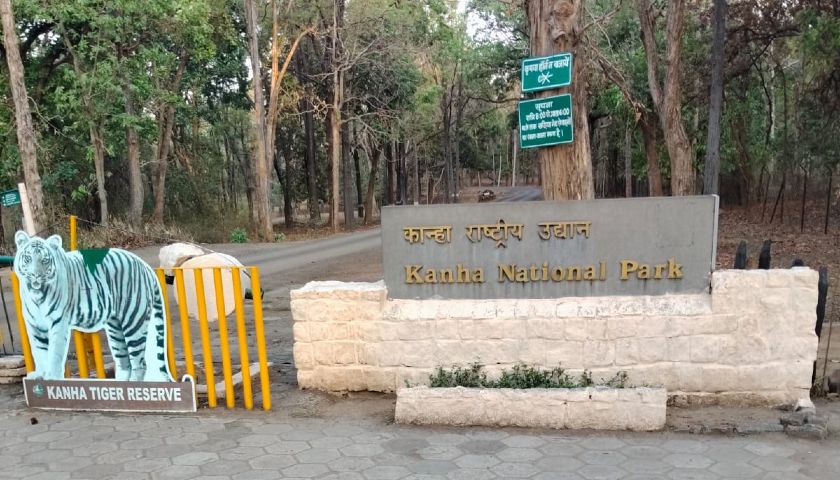
Visitors entering through Khatia Gate are usually allocated safari permits for Kanha Zone, Kisli Zone, or Sarhi Zone. Mukki Gate leads into the southern part of Kanha National Park, an area known for several well-established tiger territories and excellent wildlife movement during summer. Kisli Zone is famous for its open meadows, scenic landscapes, and reliable waterhole activity, while Sarhi Zone offers a quieter and less crowded safari experience. During late April and May, these zones often produce excellent tiger sightings as wildlife concentrates around remaining water sources. The Sringar waterhole in Kisli Zone is among the most photographed wildlife locations in Central India, especially during the peak summer safari season.
Kanha is also home to the Hard Ground Barasingha, a swamp deer species found nowhere else on earth. Watching a tiger move through a meadow while barasingha graze at the far edge is a scene you will not see anywhere else on a tiger safari in India.
Rudyard Kipling drew on Central Indian forest traditions for The Jungle Book, and Kanha's landscape fits the mood of that work more closely than any other park. The Seoni forests that directly inspired Kipling's story lie closer to Pench, but Kanha's atmosphere as a deep, layered, wildlife-rich forest is every bit what Kipling imagined.
Explore curated Kanha National Park Tour Packages
Pench National Park
Pench sits across the Madhya Pradesh and Maharashtra border in the Seoni and Chhindwara districts, and it was the Seoni forest specifically that inspired Kipling's Jungle Book. The park's open teak forest and river valley terrain make it one of the best destinations for tiger photography in India because the light is clean and the landscape gives you space to compose a frame.
From March to June, Pench's Pench river corridor becomes an extraordinary concentration point for wildlife. Tigers follow the shrinking river pools, and safari tracks through the valley give naturalists long sightlines that are rare in denser forests. Morning safaris in Pench during April and May regularly produce sightings along river banks and open water bodies.
Pench is less crowded than Bandhavgarh and Kanha, which makes it a good choice for travelers who want quality sightings without the vehicle density that peak season brings to more popular parks. It also makes an excellent second park on a Central India tiger safari circuit, pairing naturally with either Kanha or Bandhavgarh.
Harmen traveled from the Netherlands for a 10-day tiger safari across Bandhavgarh, Kanha, and Pench with Alkof Holidays. He saw tigers on multiple safaris and shared his experience directly on camera after returning to Delhi. This is his unscripted review.
Harmen booked his Central India tiger safari during the peak summer season, which is the window we consistently recommend for international travelers whose primary goal is tiger sightings. His trip covered the same parks and the same season described above. If you would like to plan a similar itinerary, contact us to discuss dates, permit availability, and what is realistic for your travel window.
Here is the Central India Tiger Safari tour Harmen customized with additional jeep safaris for higher tiger sighting chances.
🔗Bandhavgarh, Kanha, Pench Tiger Tour from Delhi with Flights
Panna National Park
Panna deserves more attention than it typically receives from international visitors, and it is one of the reserves we have followed most closely at Alkof Holidays.
The park lost its entire tiger population to poaching in 2009, which was one of the most painful chapters in Indian wildlife conservation. What followed was one of the most remarkable recoveries in global conservation history. A carefully managed relocation program introduced tigers from other reserves, and today Panna has a healthy and growing tiger population spread across a dramatic landscape of ravines, dry deciduous forest, and the Ken River corridor.
The Ken River is the key to understanding a summer safari in Panna. As water sources dry up across the reserve, wildlife funnels toward the river. Tiger sightings along the Ken River bank during May and June can be extraordinary, and the landscape itself is unlike any other Central Indian park. Panna is significantly less visited than its neighbors, which means better naturalist availability, quieter forest tracks, and safari permits that are far easier to book. For experienced wildlife travelers who have already done Bandhavgarh or Kanha, Panna offers a genuinely different experience of a tiger safari in India.
Explore the best Panna National Park Tour Packages
How to Plan a Tiger Safari in Central India
Book safari tour 90 to 120 days in advance. Book your Central India Tiger Safari Tour at least 90 to 120 days in advance, especially if you are planning to travel during the peak tiger sighting season from March to June. Core zone safari permits are extremely limited in popular parks like Bandhavgarh, Kanha, Pench, and Panna. In famous zones such as Tala Zone in Bandhavgarh, safari permits often sell out within hours after release. Safari bookings usually open around 90 days in advance, so early planning is highly recommended. At Alkof Holidays, we can manage the complete safari booking process on your behalf to secure the best possible safari zones and timings for your journey.
Highly Recommended
Explore Central India Tiger Safari Tour Packages
Covering key reserves such as Bandhavgarh, Kanha National Park, Pench, Panna, and Satpura Tiger Reserve.
Plan for at least three to four days per park. One safari gives you one chance. Three full days with morning and afternoon safaris gives you six separate opportunities, each covering different terrain and different tiger activity patterns. Most serious tiger sighting reports from Kanha and Bandhavgarh come from guests on day two or day three, not day one.
Work with naturalists who know the individual tigers. In well-established parks like Bandhavgarh, experienced naturalists know specific territorial males and females by their stripe patterns and movement history. That knowledge changes a safari completely. The difference between reading pugmarks as fresh versus hours old, or knowing which waterhole a particular tigress uses at a specific time of day, comes from years in that forest and cannot be replicated by a generic guide.
Dress appropriately for summer. Light cotton clothing in earth tones, a wide-brimmed hat, high-SPF sunscreen, and sunglasses are essential for May and June safaris. The heat between 10am and 3pm is intense. Morning safaris are manageable. Afternoon safaris are short enough to be tolerable. Carry water.
Accept the conditions and stay present. We have had guests see four tigers in a single afternoon safari and guests who completed six safaris in Bandhavgarh without a sighting. Both outcomes happen. The forest does not follow schedules. What we have consistently observed over 15 years is that guests who stay patient, listen to the naturalist, and keep their eyes on the understory rather than their phones are the ones who catch the moments that matter.
Plan Your Central India Tiger Safari with Alkof Holidays
A well-planned tiger safari in Central India is one of the most rewarding wildlife experiences available anywhere in the world. The combination of Bandhavgarh, Kanha, Pench, and Panna creates a circuit that covers different landscapes, different tiger personalities, and genuinely different safari atmospheres in a single trip.
At Alkof Holidays, we manage every element of a Central India tiger safari: permit bookings across all four parks, naturalist selection, accommodation close to core gates, internal transfers between reserves, and daily safari planning based on the most recent movement patterns from our contacts in each forest. We have been organizing these journeys since 2011, and the detail of that experience shows in outcomes that a general tour operator cannot replicate.
If you are planning a wildlife holiday to India for tiger sightings, we would be glad to discuss the right itinerary for your travel dates, group size, and priorities.
Contact Alkof Holidays to plan your Central India tiger safari.



About the Author
Sanjeev has been part of Alkof Holidays since its inception, and has been guiding guests throughout India. He has helped travelers from more than 40 countries explore the region through wildlife safaris, cultural tours, Buddhist pilgrimage journeys, and luxury private travel experiences.
Since 2011, Sanjeev has been helping travelers discover India through first-hand destination knowledge, personally visiting places before recommending them to guests.
Turn this article into a tailor-made holiday plan.
Speak with a destination expert for private itinerary ideas, timings, and practical planning help.



 +91-9873003099
 +91-9873003099
 Ask a Question