

I have been planning private tours across India since 2011 and have personally managed hundreds of custom itineraries across India for travelers from more than forty countries. In all those years, I have never seen a single technology shift affect the quality of travel experiences as quietly and as consistently as AI-generated travel advice is doing right now.
Most people assume that AI travel planning tools are mainly used for inspiration or initial research. That was true two years ago. It is not true anymore. Travelers today are using AI chat tools as live advisors during their tours, consulting them to evaluate hotel decisions, compare routing choices, and verify information in real time. And in a country as operationally layered as India, that is creating problems that go far beyond minor inconvenience.
The issue is not that AI is always wrong. The issue is that it often sounds certain even when it lacks access to the information required to make a reliable decision.
Here is what that actually looks like on a real tour.
What AI Missed About Safari Planning in Kanha
In March 2026, I managed a wildlife tour that had been booked only one month before departure. For a private India wildlife tour covering Kanha National Park, Panna Tiger Reserve, and Gir National Park, booking one month out is genuinely late. Core zone jeep safaris fill up well in advance. We worked hard and secured private jeep safaris in the core zones at all three parks, which was a good outcome given the timing.
The best safari itinerary isn't always the one that looks best on a map.
In India's national parks, safari zone allocations, gate assignments, and permit availability change constantly. That's why experienced planning still matters.
Explore our Best Tiger Safari Tours in India
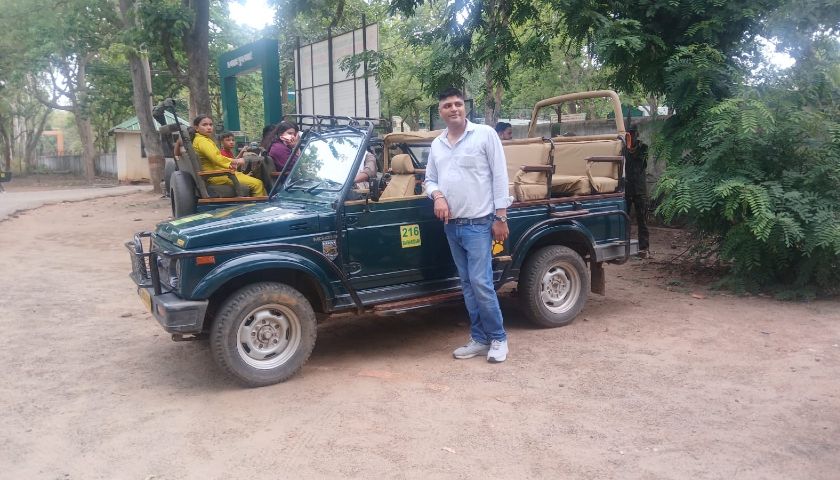
At Kanha specifically, the forest department allocation gave us three safaris in the Khatiya zone and one afternoon safari in the Sarhi zone, with entry only through the Sarhi gate. These two zones are not adjacent to each other. I explained the zone geography, the gate distances, and the reasoning behind our hotel placement before the guests confirmed their booking. They understood it. They agreed to it. We moved forward.
Then the tour started. And at some point, the guests began consulting AI.
Based on the information provided, the AI suggested that the accommodation choice may not have been optimal. It said we should have booked accommodation near the Sarhi gate to reduce travel time for that safari. It did not frame this as a question or a possibility. It stated it as a conclusion. The response led the guests to question the original planning decision.
What AI did not know, and could not know, was that placing the guests near Sarhi for one afternoon safari would have forced them to travel back toward Khatiya every single morning for the other three safaris. The total travel burden would have been significantly higher, not lower. Khatiya was the correct base for four days of mixed-zone safaris. Sarhi was a single afternoon exception.
One of the travelers came forward and reminded the other traveler about the written conversation we had with them even before the tour was booked. He acknowledged that the zone availability had been limited at the time of booking. That settled the discussion. The tour continued well. They later returned home and left us a five-star review.
But I have thought about that situation many times since. AI had no access to the forest department booking portal. It had no understanding of Kanha safari zone geography in practical terms. It had no way to know what core zone availability looked like on the day we made those bookings. It simply generated a confident-sounding answer based on whatever partial information existed in its training data, and it created unnecessary doubt about a trip that had been carefully planned.
The Roads That Are Not on Any Map
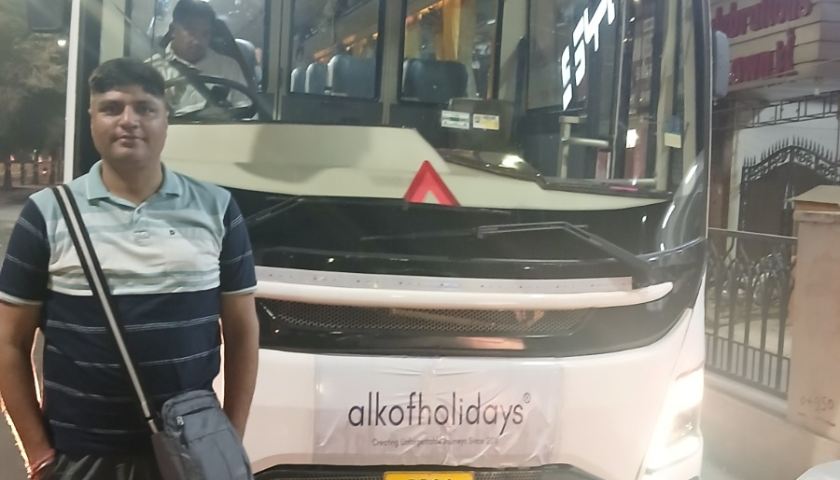
The same pattern appeared during a Buddhist Circuit journey we operated through northern India and Nepal. We were operating a large coach on this route. Our drivers knew from years of experience that certain roads have physical height barriers installed by local municipalities or state highway departments for bridge load management. These barriers are real, they are fixed, and they are not captured on any navigation app.
A pilgrimage is more than moving from one sacred site to another.The Buddhist Circuit spans multiple states, border crossings, road networks, and local conditions that change throughout the year. Experienced planning helps ensure your journey remains focused on the pilgrimage, not the logistics.
Explore Our Buddhist Pilgrimage Tours
When our route recommendation differed from what the navigation app was showing, the group consulted an AI assistant on their phones. The AI told them to follow the app.
Rather than debate the issue, our driver and tour manager decided to demonstrate the situation on the ground. Our driver drove to the first disputed section and stopped in front of the barrier. The coach could not pass. We turned around, took the route our driver had originally suggested, and arrived without issue.
Our driver was right because he had first-hand experience of those roads, while the navigation system was relying on generalized routing data.
This is the version of the problem that I find hardest to explain to travelers before a trip. No amount of digital research captures the physical facts of road infrastructure in rural and semi-urban India. Height barriers, bridge weight limits, seasonal road surfaces in hill areas, unmarked construction diversions, and the timing of state border checkpoints are all managed locally. They exist in the knowledge of drivers who cover these routes regularly. They do not exist in any training dataset.
What AI Tools Cannot Access About India Travel
These two situations point to specific categories of information that AI travel planning tools simply cannot reach, regardless of how confident the output sounds.
Forest department safari systems. Jeep safari bookings at India's tiger reserves and national parks are managed through a government portal that updates in real time. Zone availability, core zone versus buffer zone access, gate-specific assignments, and booking windows are all dynamic. When a tour operator makes decisions about safari configurations, those decisions reflect what was actually available on a specific date. An AI tool responding to a question during the tour has no way to reconstruct that availability picture or evaluate whether a different configuration was ever possible.
Inter-state vehicle regulations and taxation. Tourist vehicles in India are not available for unlimited daily use in the way that many travelers expect after reading AI-generated advice. Vehicles crossing state lines within the National Capital Region face MCD entry taxes, state government levies, and route-specific toll charges that change periodically. The same applies across other state borders throughout the country. An AI tool advising a traveler to ask for the vehicle all day or to simply change hotels has no awareness of any of this.
Ground-level road intelligence. Physical height barriers, bridge load restrictions, seasonal road conditions in hill stations, real-time traffic patterns, and local diversion routes are managed at district and municipal levels across hundreds of jurisdictions. No national database captures all of this. Your driver's network of contacts on active routes is genuinely more current and more accurate than any navigation app or AI assistant.
Booking context. When your tour operator makes decisions about hotels, safari zones, or routing, those decisions are made against the availability that actually existed at the time of booking. An AI tool questioned during the tour has no visibility into that window. It evaluates your situation against a generic idea of what should be possible, not against what was available on the day your itinerary was confirmed.
Where AI Actually Helps in India Travel Planning
I want to be clear that I am not suggesting travelers avoid AI tools entirely. They have genuine uses in the planning phase.
AI tools are genuinely useful for building an initial understanding of a destination. If you want to read about the history of Mughal architecture before visiting Agra, or learn about the different tiger reserves in central India before deciding which ones to include, or understand what a core zone safari means versus a buffer zone safari, these tools can give you a solid foundation. They work well for broad orientation, language basics, cultural context, and generating questions you want to ask your operator.
More importantly, AI tools are not accountable for the outcome. If a recommendation turns out to be wrong, the chatbot moves on to the next conversation. Your tour operator is still responsible for getting you to the next destination safely and on time.
The Knowledge That No Training Dataset Can Replace
AI can tell you where the Taj Mahal is, roughly how long it takes to drive from Delhi to Jaipur, or which months are considered the best time to visit Ranthambore. That kind of general information is useful and AI handles it well enough.
It cannot tell you why your driver avoided a particular highway at 8 PM on a Tuesday. It cannot tell you why your safari gate assignment differs from what a travel blog described two years ago. It cannot tell you why the hotel near one safari gate would have created more total travel across your trip, not less. It cannot tell you what was actually available when your itinerary was confirmed six weeks ago.
Those answers exist in the experience of people who work these routes, manage these bookings, and are personally accountable for what happens when something goes wrong. In India specifically, where road infrastructure, wildlife park systems, state taxation, and ground logistics operate very differently from what Western travelers may be familiar with, that local expertise is not a premium add-on. It is often the difference between a trip that runs well and a night spent on a bridge waiting for traffic to clear.
Trust experienced local professionals. Ask them to explain their decisions. Push back if something does not make sense. But do it in a real conversation with someone who knows the ground, not in a chat window with a tool that has never been to Patna.



About the Author
Sanjeev has been part of Alkof Holidays since its inception, and has been guiding guests throughout India. He has helped travelers from more than 40 countries explore the region through wildlife safaris, cultural tours, Buddhist pilgrimage journeys, and luxury private travel experiences.
Since 2011, Sanjeev has been helping travelers discover India through first-hand destination knowledge, personally visiting places before recommending them to guests.
Turn this article into a tailor-made holiday plan.
Speak with a destination expert for private itinerary ideas, timings, and practical planning help.



 +91-9873003099
 +91-9873003099
 Ask a Question